Top 10 Chicken Recipes Top 10 Chicken Recipes
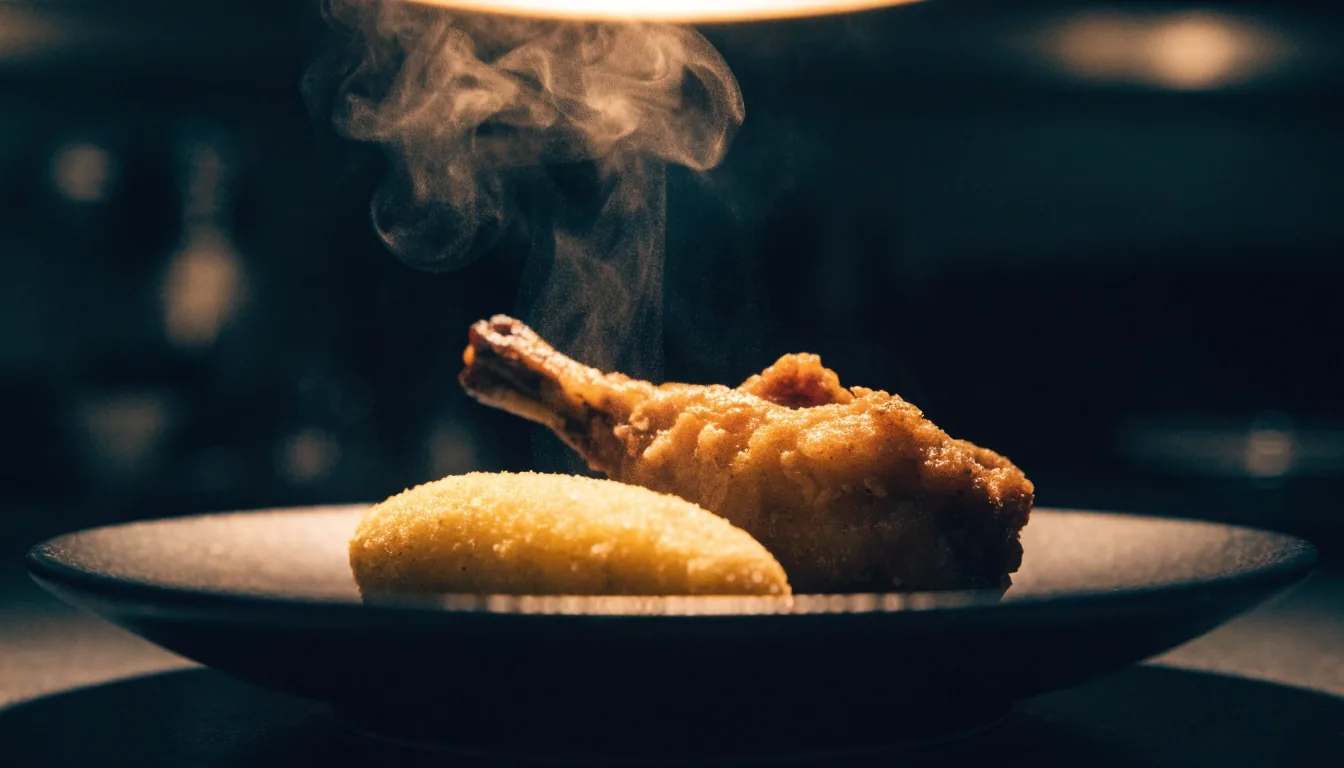
A crispy fried chicken wing and a golden breaded chicken tender on a matte plate under warm lamplight

Breading and coating guideAir fryer and stovetop

Crispy Wings and Tenders, Explained

Crispy outside, juicy inside is not a secret, it is a set of small decisions: how dry the chicken is, how thick the coating is, how hot the oil or air is, and how much space each piece gets. This page covers breading, dry rubs, buttermilk marinades, and air-fryer settings for wings and tenders.

Why wings and tenders behave differently

A wing is skin-on and bone-in, so the skin has to render and crisp while the meat stays moist. A tender is a small, lean strip with no skin, so it depends on the coating and a short cook. That is why the same breading can work on both but the timing does not. Treat them as two problems, not one.

Practically, that split decides your setup. Wings want a longer, slower first pass so the fa under the skin can render before the surface sets, then a hot finish to color the crust. Tenders want the opposite rhythm: a quick, hot cook that sets the coating before the lean meat has a chance to dry out. If you build one timeline for both, one of them always loses — either pale, flabby wing skin or a tender that saws apart under a knife.

WingsRender, then crispTendersCoat, then cook fast
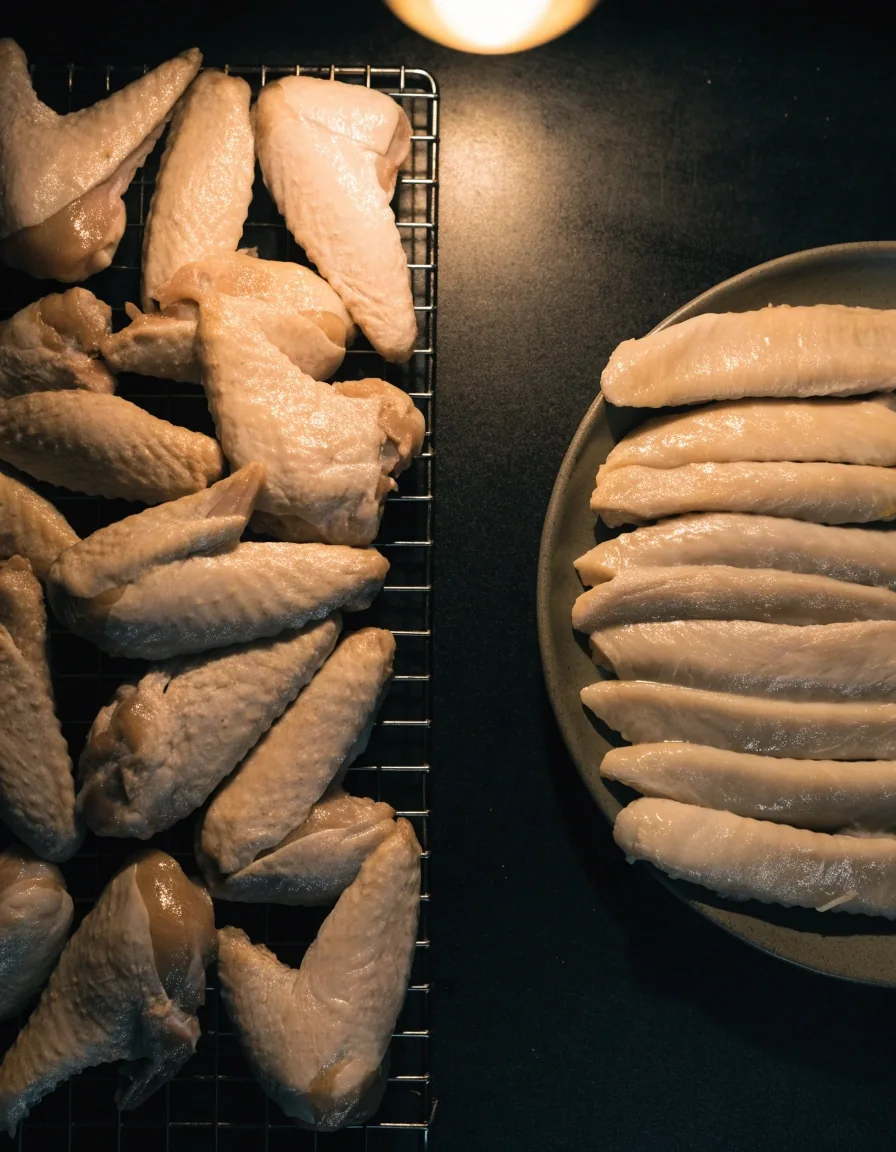
Skin-on chicken wings on a wire rack next to skinless tender strips on a matte plate
Skin-on wings and skinless tenders side by side — same breading, two different clocks.

The dry surface rule

The cheapest improvement you can make to any fried or air-fried recipe.

Breading sticks to a dry surface and slides off a wet one. Pat the chicken with paper towels, then let it sit uncovered in the fridge for 20 to 30 minutes if you have time. That step dries the surface and firms the coating.

If you have 5 minutes
Pat each piece dry on both sides, including the folds at the wing joint, then bread straight away. You still get a cleaner crust than breading a wet piece.
If you have 30 minutes
Set the pieces uncovered on a rack in the fridge. The cold air pulls surface moisture away and the coating grips harder, which matters most on smooth tender strips.
What to skip
Do not rinse the chicken first. You are adding water back to the exact surface you just dried.

Buttermilk marinade: what it does

Buttermilk is acidic and slightly thick, so it tenderizes the outer layer of the meat and gives the flour something to grab. Two hours is enough for tenders; overnight is fine but not required.

If you do not have buttermilk, plain yogurt thinned with milk or a splash of vinegar in milk works. Drain before breading, do not dump the marinade into the flour. That one habit is what separates a shaggy, clinging crust from a paste that slides off in the pan.

Soak time2 hours to overnight
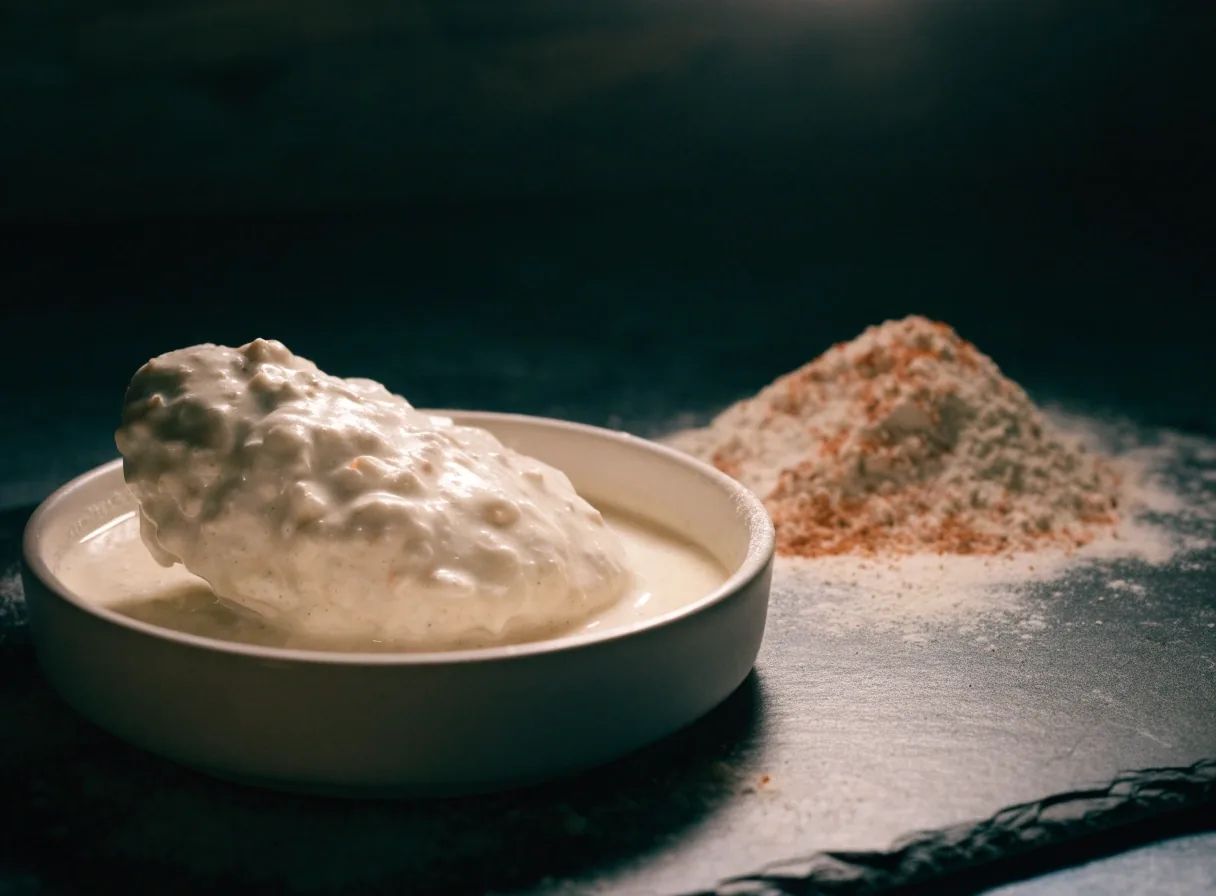
Hands lifting a chicken tender out of a shallow dish of buttermilk beside a bowl of seasoned flour
Drain each piece before it meets the flour, or the coating turns to paste.
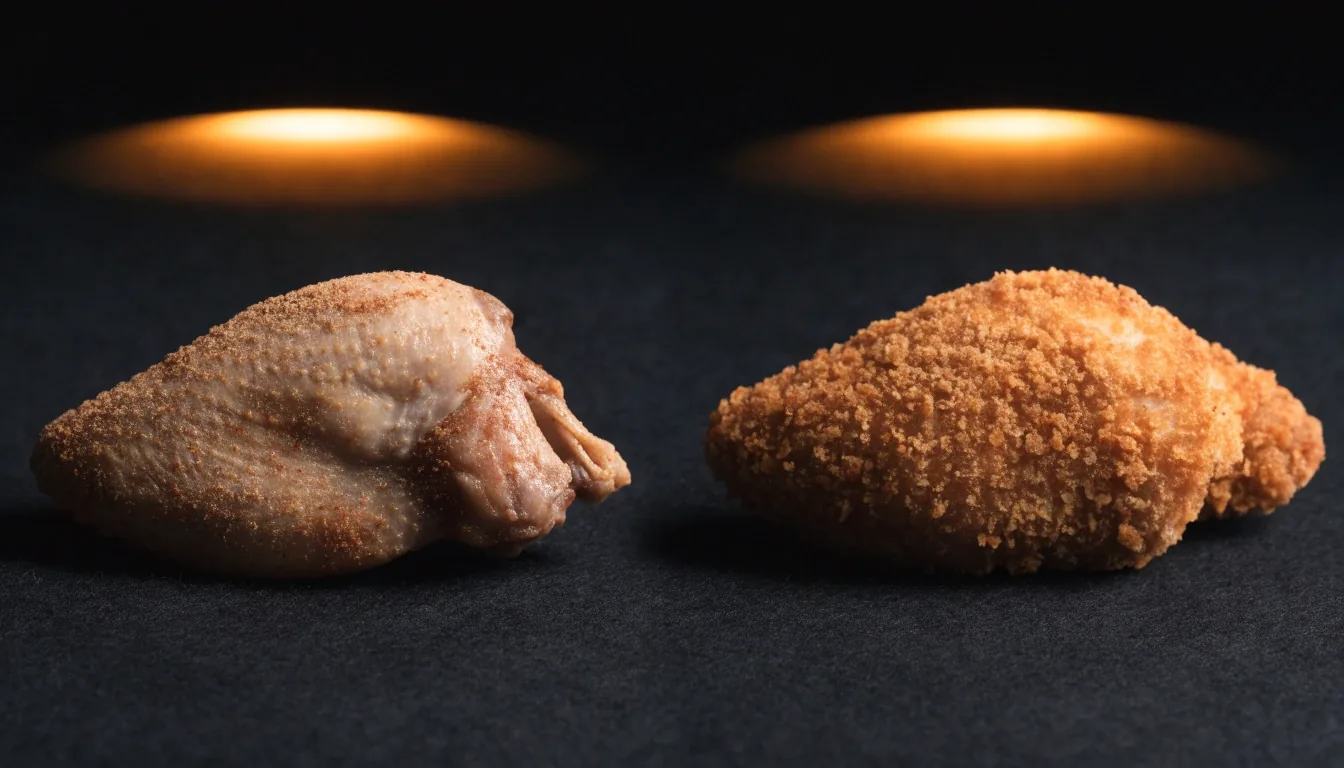
A dry-rubbed wing with bare crisp skin beside a flour-breaded tender on a dark surface

Dry rub vs. breading

A dry rub is seasoning only, no coating, and it gives you crisp skin with direct contact to the heat. A breading adds a crust and holds more seasoning, but it also traps moisture if it is too thick.

For wings

A dry rub plus high heat is the simplest route. Season, let the salt sit for a few minutes, then cook the skin until it blisters. Nothing sits between the crust and the heat, so the surface dries as it browns.

Best forBone-in, skin-on

For tenders

A thin flour or cornstarch coating gives more crunch and carries the seasoning with it. Keep the coat light enough that you can still see the shape of the strip underneath, and press it on rather than burying the meat.

Best forSkinless strips
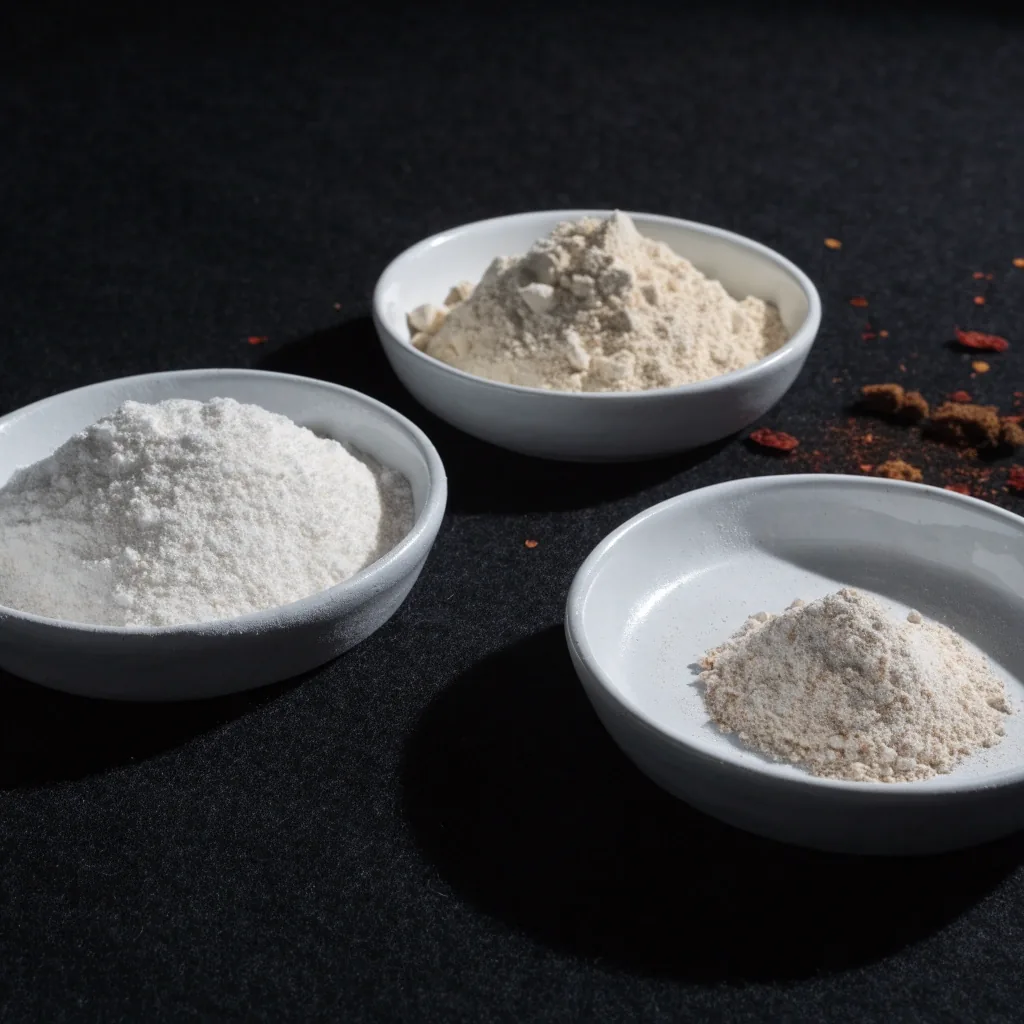
Shallow dishes of flour, cornstarch, and baking powder under a raking warm light

Cornstarch, flour, and the crunch question

Flour browns and tastes familiar; cornstarch crisps harder and stays crisp longer. A mix of both gets you browning plus crunch. Add a little baking powder to the flour for air-fryer wings, since it helps the surface bubble and set.

Whatever you use, shake off the excess. A thick coat turns gummy, and gummy coating is the reason a wing that looked right in the pan arrives at the table soft. If you are cooking in batches, dust the pieces you are about to cook, not the whole pile at once.

BrowningFlourLasting crunchCornstarch

Air fryer settings that work

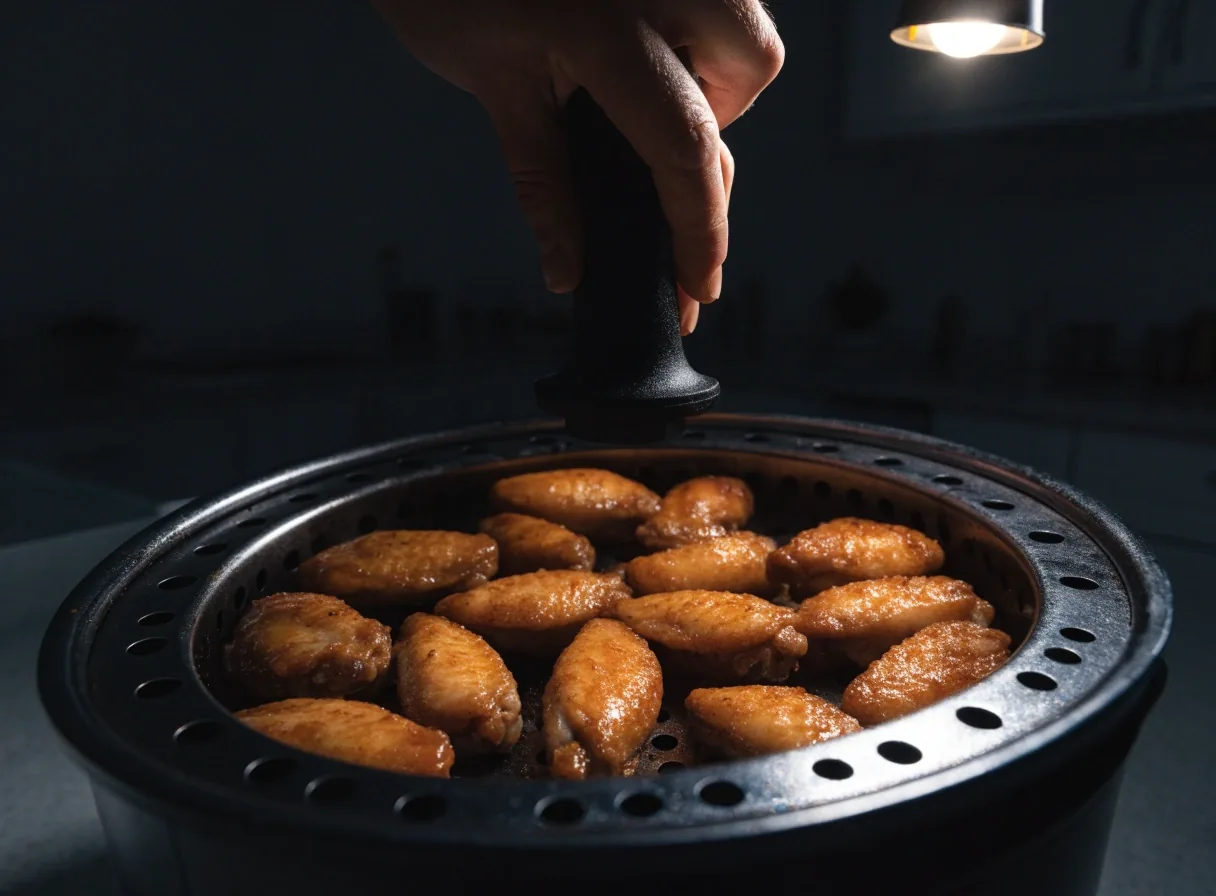
Preheat the air fryer for a few minutes. Cook in a single layer and shake the basket halfway. Crowding is the most common cause of pale, soft results, and it is the one mistake no seasoning can fix.

A single layer of seasoned wings in an air fryer basket being shaken over a dark counter
Air fryer temperatures and times for chicken wings and tenders
What you are cooking Temperature Time What to watch
Wings, first pass 380°F About 12 minutes Skin starts to tighten and the surface dries
Wings, finish 400°F 5 to 6 minutes Edges darken fast, so stay close to the basket
Tenders 400°F 8 to 10 minutes Thickness decides the time, check the middle

Times are a starting point. Basket size, piece size, and how cold the chicken went in all shift the finish, so use the first batch to learn your own machine.

Frying without a deep fryer

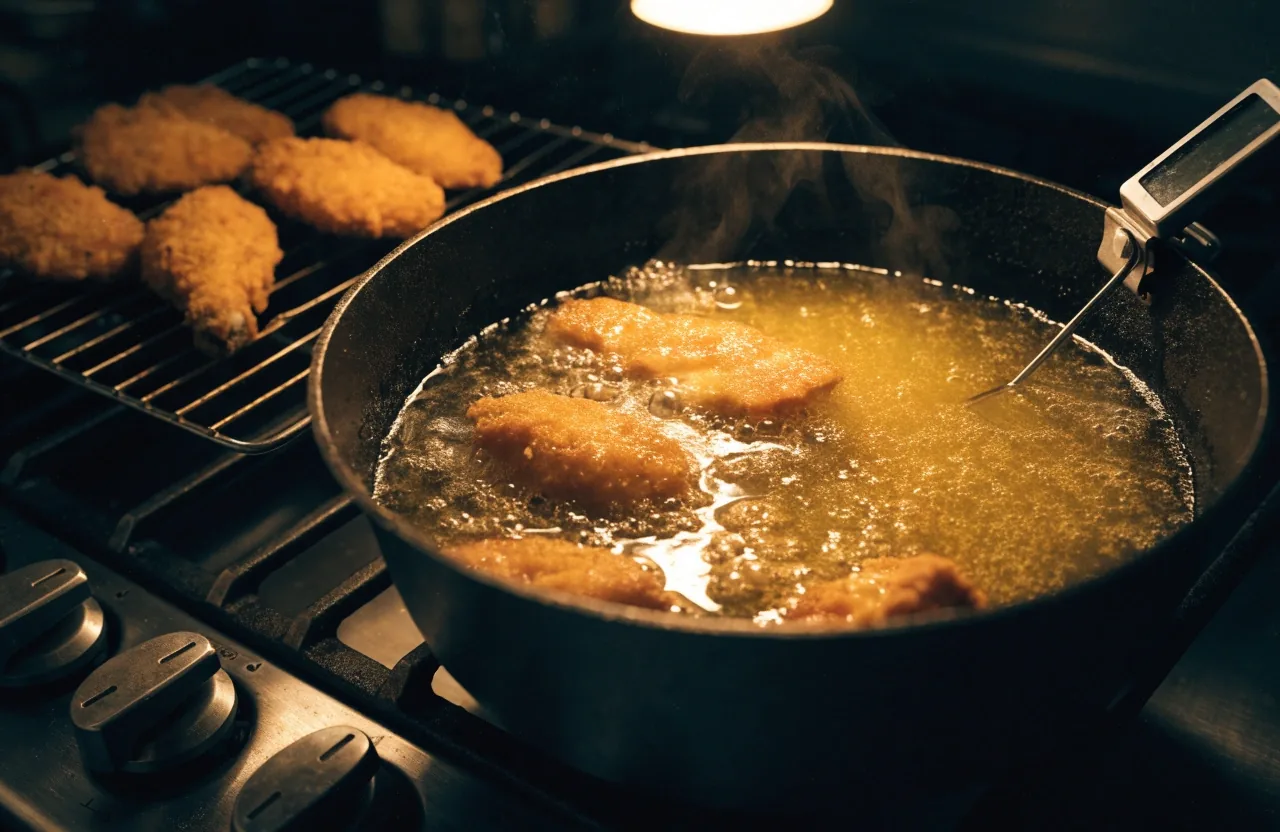
A heavy pot with two inches of oil works for wings and tenders and uses far less oil than a fryer. Hold the oil around 350°F and fry in small batches so the temperature does not drop. A clip-on thermometer takes the guesswork out.

Drain on a rack, not paper towels, so the bottom does not steam. A rack keeps air under the crust while the piece cools, and that gap is what keeps the underside from going soft before anyone reaches the plate.

Chicken pieces frying in a heavy pot with a clip-on thermometer and a draining rack beside it
Two inches of oil, a thermometer, and small batches do the work of a countertop fryer.

Sauces and dips that hold up

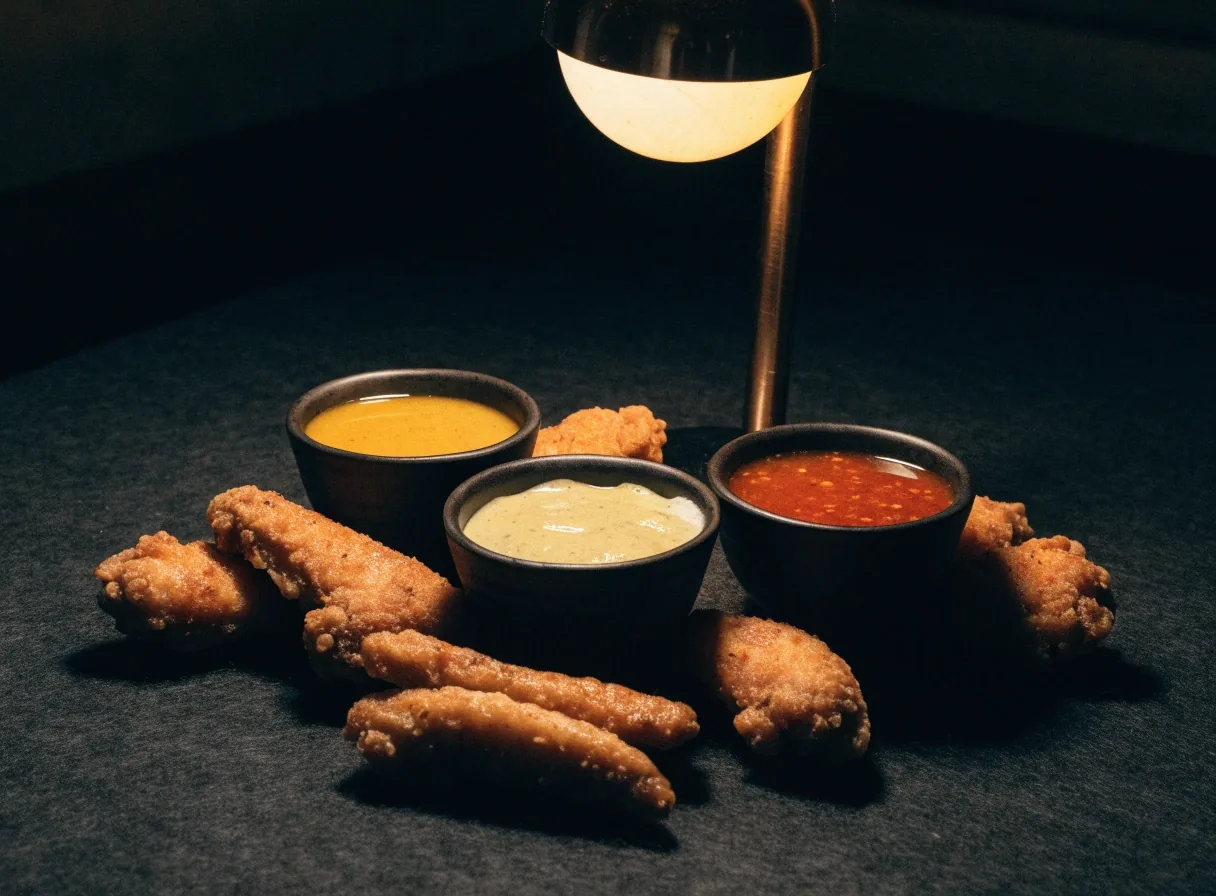
Honey mustard, ranch, and a vinegar-based hot sauce cover most of the range. A creamy dip cools heat; a sharp one cuts through breading. If you sauce the whole batch, do it right before serving so the crust does not soften. Otherwise, keep the sauce on the side and let people dip.

Three bowls of honey mustard, ranch, and vinegar hot sauce beside finished wings and tenders
  • Creamy dips

    Ranch and similar dressings coat the tongue and quiet a hot crust. Good with a heavily spiced batch.

  • Sharp sauces

    Vinegar-forward hot sauce cuts through fa and breading. Thin enough to run into the crevices of a craggy crust.

  • Sweet and tangy

    Honey mustard sits between the two. Serve it on the side, since sugar in a glaze softens a crust within minutes.

Making tenders juicy

Tenders dry out fast because they are small and lean. A short buttermilk soak, a hot cook, and pulling them as soon as they hit 165°F all help. Rest them for a couple of minutes before slicing.

  1. Soak

    Two hours in buttermilk is enough. Longer is fine, but a short soak already does the work on a thin strip.

  2. Cook hot

    Keep the oil or the basket hot so the coating sets before the lean meat has time to lose moisture.

  3. Pull early

    Take them out as soon as they reach 165°F at the center. Every extra minute past that point costs juice.

  4. Bread ahead

    If you are breading ahead, keep them in the fridge and fry straight from cold, which slows the cook just enough.

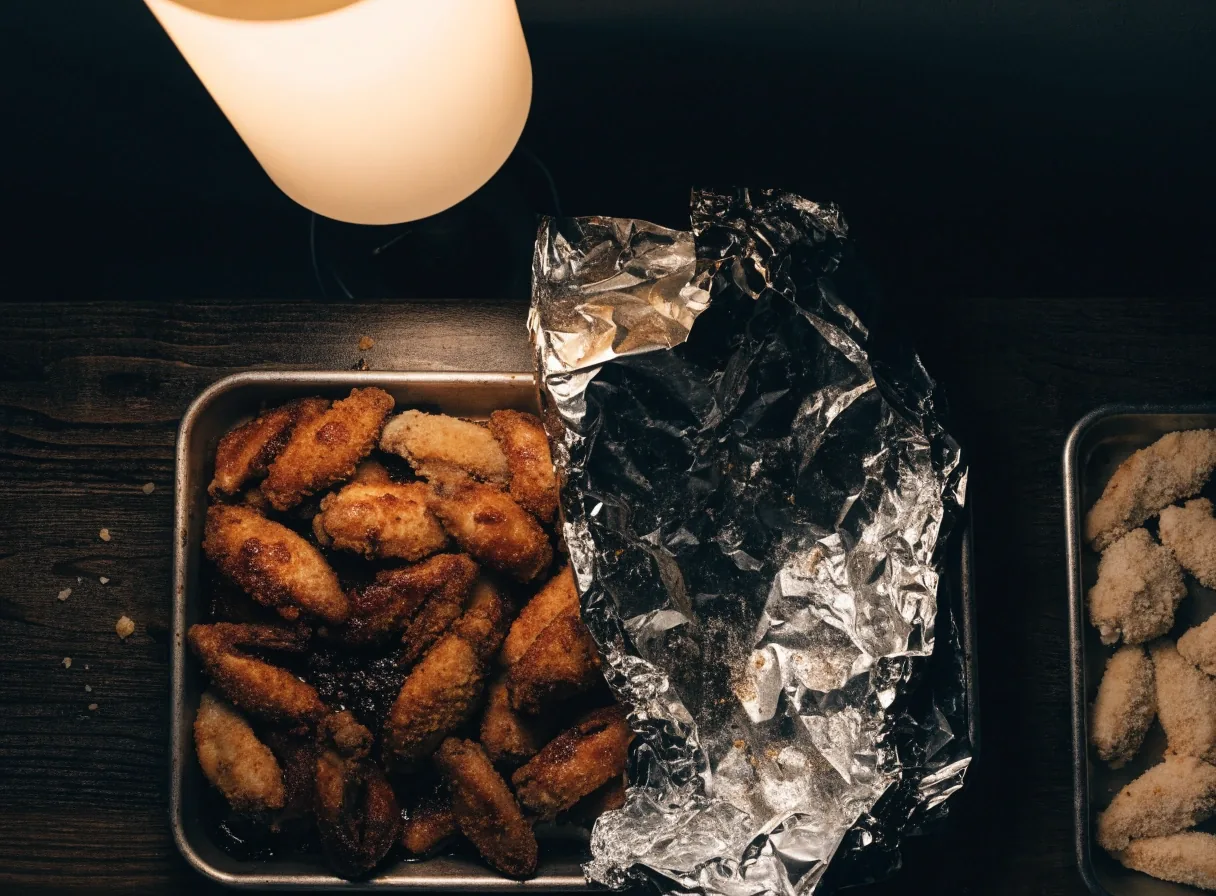
A tray of baked chicken wings resting under foil beside a second unsauced tray
Hold unsauced trays under foil and dress them at the last minute.

Wings for a crowd

Wings scale well because you can bake or air-fry them in batches and hold them under foil. A dry rub works better than a wet sauce for holding. Sauce at the end, right before they hit the table.

For a mixed group, offer two heat levels and keep the hotter one separate. That way nobody has to guess which tray is which, and the milder batch stays mild for the people who want it. This is also where the dave hot chicken style of heavily spiced, cayenne-forward coating earns its place — it belongs on its own tray, clearly apart from the rest.

A quick heat ladder for breaded chicken

Heat in a breading comes from the seasoning you mix into the flour, the sauce you finish with, or both. Reading the ladder from top to bottom tells you where a batch will land before you cook it.

Plain Salt, pepper, and a little paprika. The coating does the talking and the heat is a background note.
Warm A spoon of cayenne or a chili blend in the flour. Noticeable on the finish, not on the first bite.
Hot Cayenne in the coating plus a vinegar hot sauce at the end. Two sources, so the heat arrives early and stays.
Nashville-leaning A cayenne-and-lard wash poured over the finished crust. Serve it on its own tray with plenty of plain bread beside it.

If you want the full range of hot styles — from a mild cayenne dusting to a full Nashville-style wash — the dedicated heat guide walks through each one.

Read the hot chicken heat guide

Questions that come up most

Short answers to the things people ask before their first batch of wings or tenders.

Can I use the same breading for wings and tenders?

Yes, the coating itself is fine for both. What changes is the timeline: wings need a slower first pass so the skin renders, while tenders need a short hot cook so the lean meat does not dry out. Build two schedules, not two recipes.

Do I have to marinate overnight?

No. Two hours in buttermilk is enough for tenders, and wings gain little from a long soak because their skin is the part that crisps. Overnight is convenient, not required.

Why did my coating fall off in the pan?

Usually a wet surface or too much marinade carried into the flour. Pat the piece dry before it goes into the buttermilk, drain it before breading, and press the coating on instead of letting it sit in a thick pile.

Can I sauce everything ahead of time?

You can, but a wet sauce softens a crust within a few minutes. Sauce right before serving, or keep it on the side. For a crowd, an unsauced tray holds far better under foil than a dressed one.

Where to go next

Wings and tenders sit in the middle of the catalog. These pages pick up the styles on either side of them, and the contact page is the place to send questions about a method that did not behave the way you expected.

Back to the full catalog

Kitchen questions are welcome by phone at +1-312-555-0472, Monday through Friday, 9:00 AM to 6:00 PM, or Saturday 10:00 AM to 4:00 PM. Our address is 1250 N Milwaukee Ave, Chicago, IL 60622.