
Recipe curation standards Chicago, Illinois
About This Chicken Recipe Collection
Top 10 Chicken Recipes is a curated catalog of chicken dishes, written for people cooking at home in the United States. We pick dishes by cut, method, and seasoning, then explain the technique so the result is repeatable on a normal weeknight.
Who curates the collection
The catalog is put together by the editorial team behind this site, based in Chicago at 1250 N Milwaukee Ave. We are home cooks and recipe testers, not a restaurant. The work is choosing dishes, testing the technique, and writing it up so someone else can follow it.
That means every entry has a person behind it who cooked the dish, wrote down what happened, and left the awkward parts in. When a step took three tries to get right, the entry says so, because that is the part that actually helps on a weeknight.
- Where
- 1250 N Milwaukee Ave, Chicago, IL 60622
- What we are
- Home cooks and recipe testers
- Desk hours
- Mon–Fri 9:00 AM – 6:00 PM, Sat 10:00 AM – 4:00 PM
- Reach us
- Contact the editorial desk
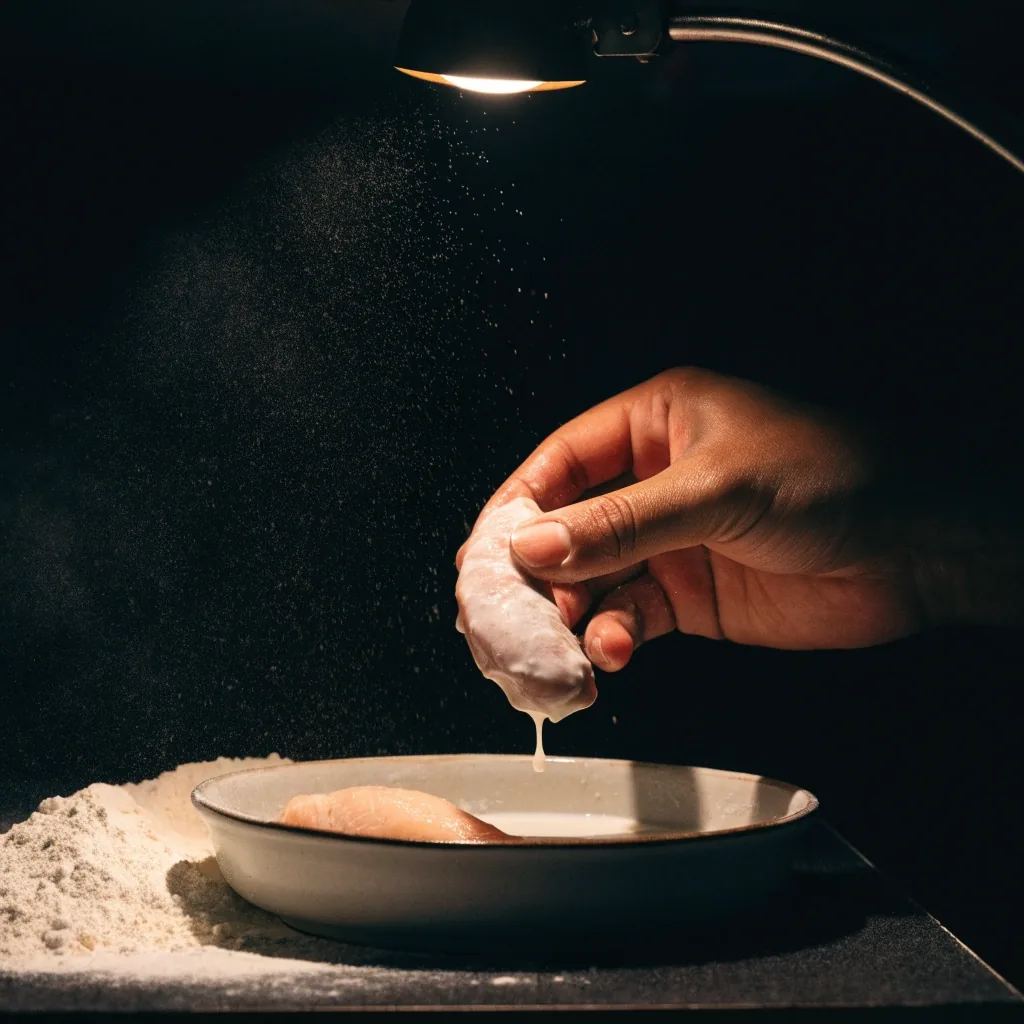
Dredging a tender at the test counter. If a coating only works with a specialty flour, the entry says where to find it.
How dishes get selected
A dish earns a spot when the cut, the method, and the seasoning come together in a way that is worth the effort. We look for techniques that work in a home kitchen, ingredients that are easy to find at a standard U.S. grocery store, and a result that holds up to the styles people already know. Nothing here requires a specialty market or professional equipment.
In practice that rules out more dishes than it lets in. A recipe that needs a deep fryer, a curing chamber, or a cut the butcher counter does not carry gets skipped, however good it tastes. What stays is the shortlist you can shop for on the way home.
The cut has to be ordinary
Thighs, wings, breasts, tenders
The method has to fit a home stove
Oven, skillet, or a pot of oil
The seasoning has to earn its place
Every spice you can actually taste
The result has to hold up the next day
Reheats without turning to cardboard
How we test
Testing means cooking the dish more than once, in a normal oven or on a normal stove, and adjusting until the times and temperatures are reliable. We check doneness by temperature, not by look.
-
Step 1
Cook it twice
Once to see what happens, once to confirm the numbers repeat on a different day with a different pan.
-
Step 2
Check by temperature
A thermometer in the thickest part of the cut decides doneness. Color on the outside is not evidence.
-
Step 3
Name the equipment
If a technique only works with a specific piece of equipment, we say so instead of assuming you own it.
-
Step 4
Write the limits down
Long marinades, deep pots, and long rests get flagged in the entry so nothing surprises you halfway through.
What we compare against
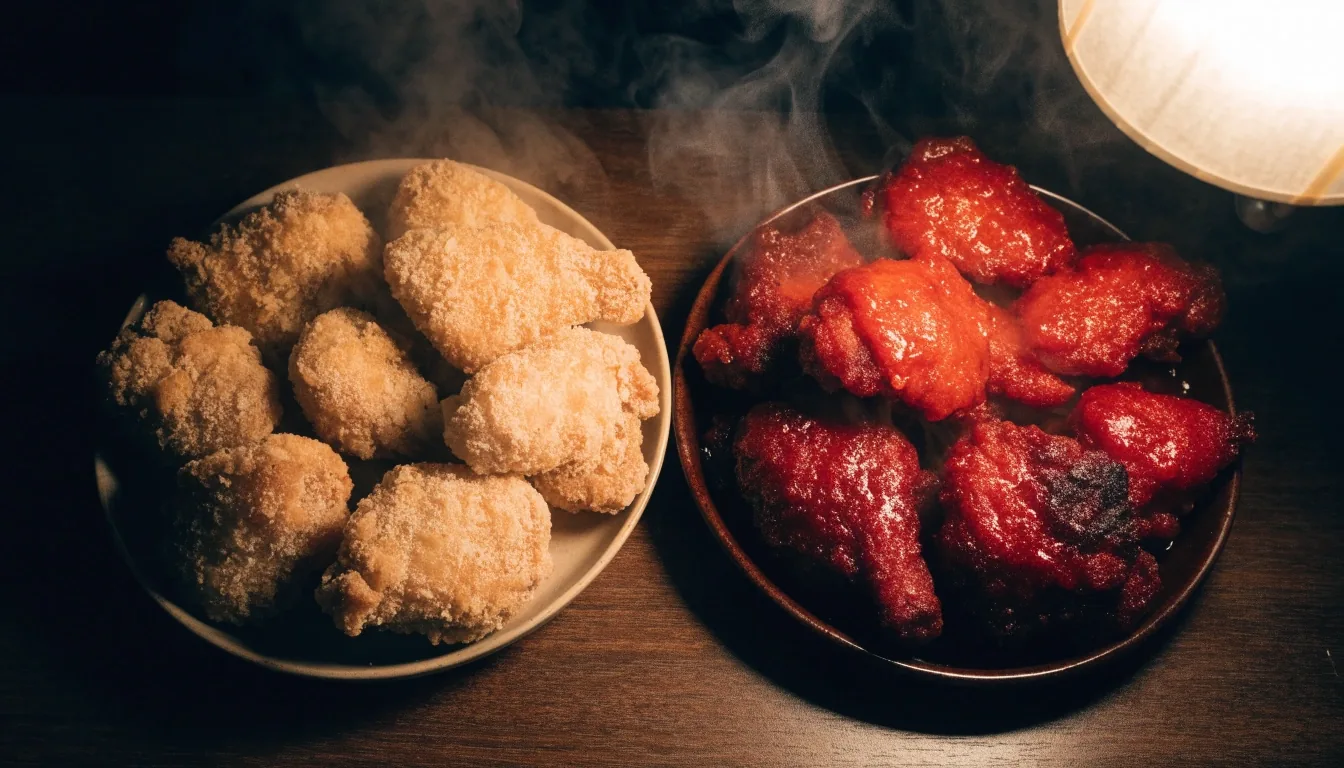
Many of these dishes have a well-known reference point. KFC set expectations for classic bucket chicken. Bojangles and Church's Texas Chicken show how regional seasoning and biscuits shape a fried chicken meal. Chick-fil-A is a reference for the breaded sandwich format. Zaxby's is a reminder that the dip is part of the dish. Knowing the reference helps you season with intent.
We name these styles as a way to describe a flavor target, not to copy a menu. If you want your dave hot chicken style tenders to land closer to the Nashville idea of heat, the reference tells you what you are aiming at, and the recipe tells you how to get there in your own kitchen.
The references we keep in mind
- Classic bucket chicken. Heavy breading, steady heat, built for a crowd.
- Regional seasoning and biscuits. Pepper-forward spice with a soft, buttery side.
- The breaded sandwich. A thin, even crust that stays crisp under pickles.
- The dip as part of the dish. Sauce is a component, not an afterthought.
What we do not do
No restaurant reviews
We do not publish restaurant reviews or rank chains against each other. The catalog is about cooking, not about who had a better lunch.
No products, no paid placements
We do not sell products or run affiliate offers. There are no paid placements in the catalog, and no entry is there because someone paid for it.
Limits are printed, not hidden
If a recipe has a real limitation, such as needing a deep pot or a long marinade, we say so in the entry, at the point where it matters.
Corrections and feedback
If a time or temperature does not work in your kitchen, we want to know. Corrections get folded back into the entries. Recipe questions and notes are welcome through the contact page, and they help the catalog stay useful rather than static.
Send the oven model, the pan size, and what the dish did instead of what the entry promised. That is enough for us to retest the step and correct the numbers.
Where the catalog is going
The plan is more tested technique on the style pages, and clearer sorting in the catalog so you can filter by time and heat. Global dishes will keep growing as we add entries. If there is a dish you want covered, say so and it goes on the list.
Start with a dish, or ask us one
Read the curation standards behind the entries, browse the full catalog by cut and method, or send the editorial desk a recipe question. We read everything, and we reply to messages that need a real answer.