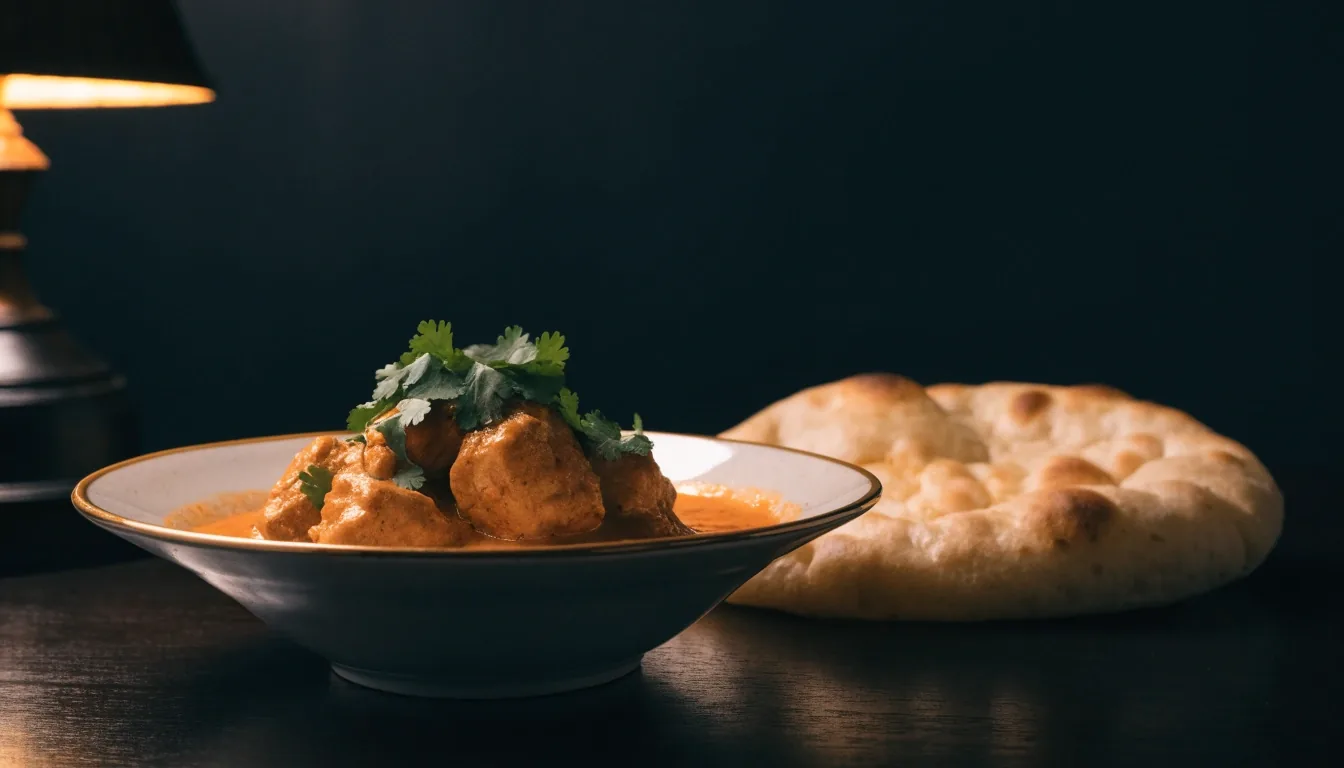
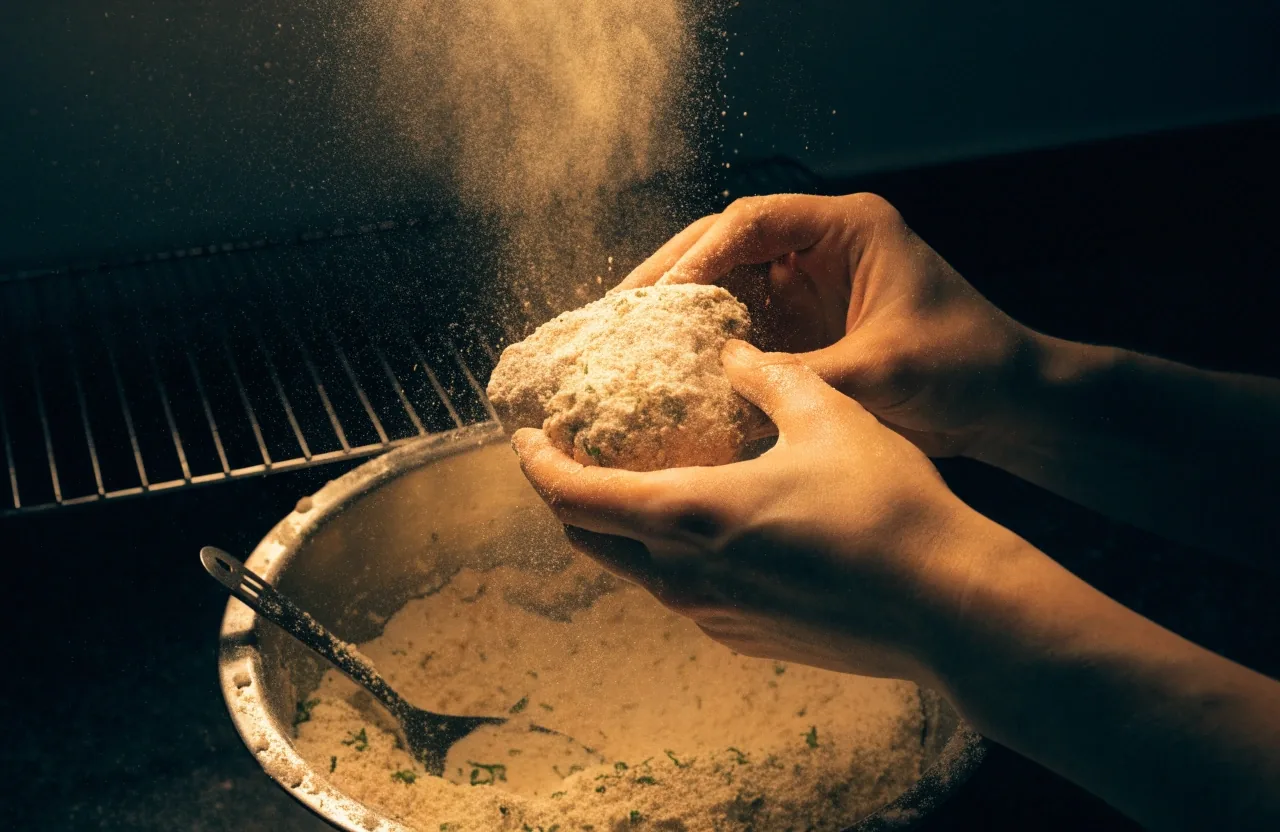
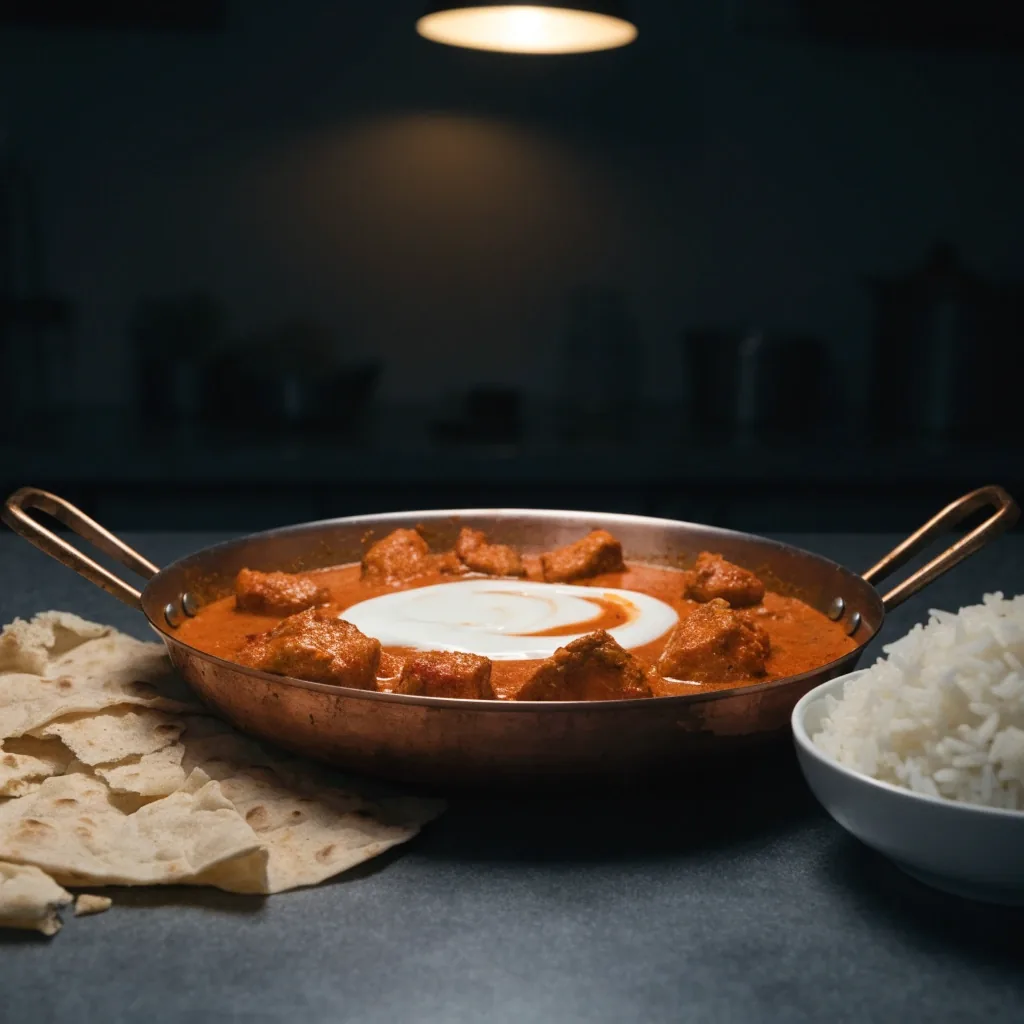
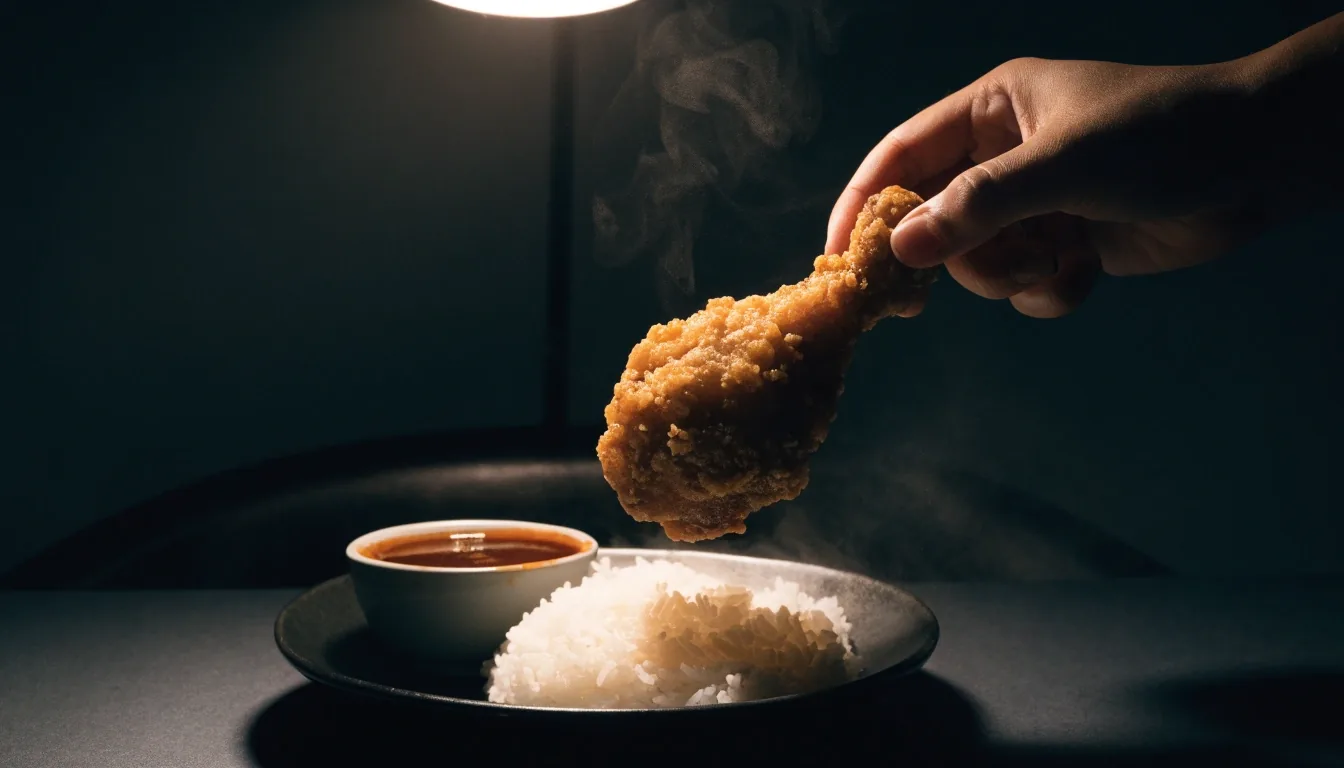
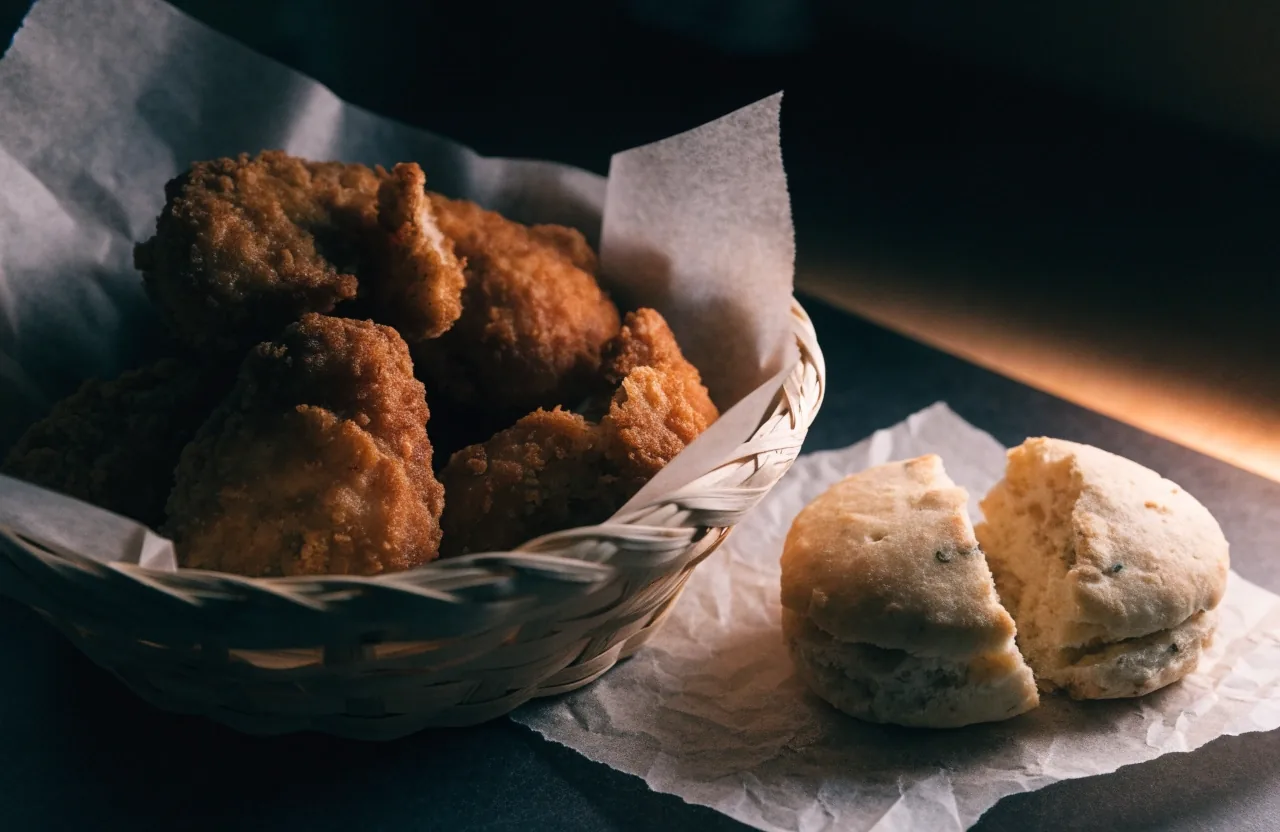
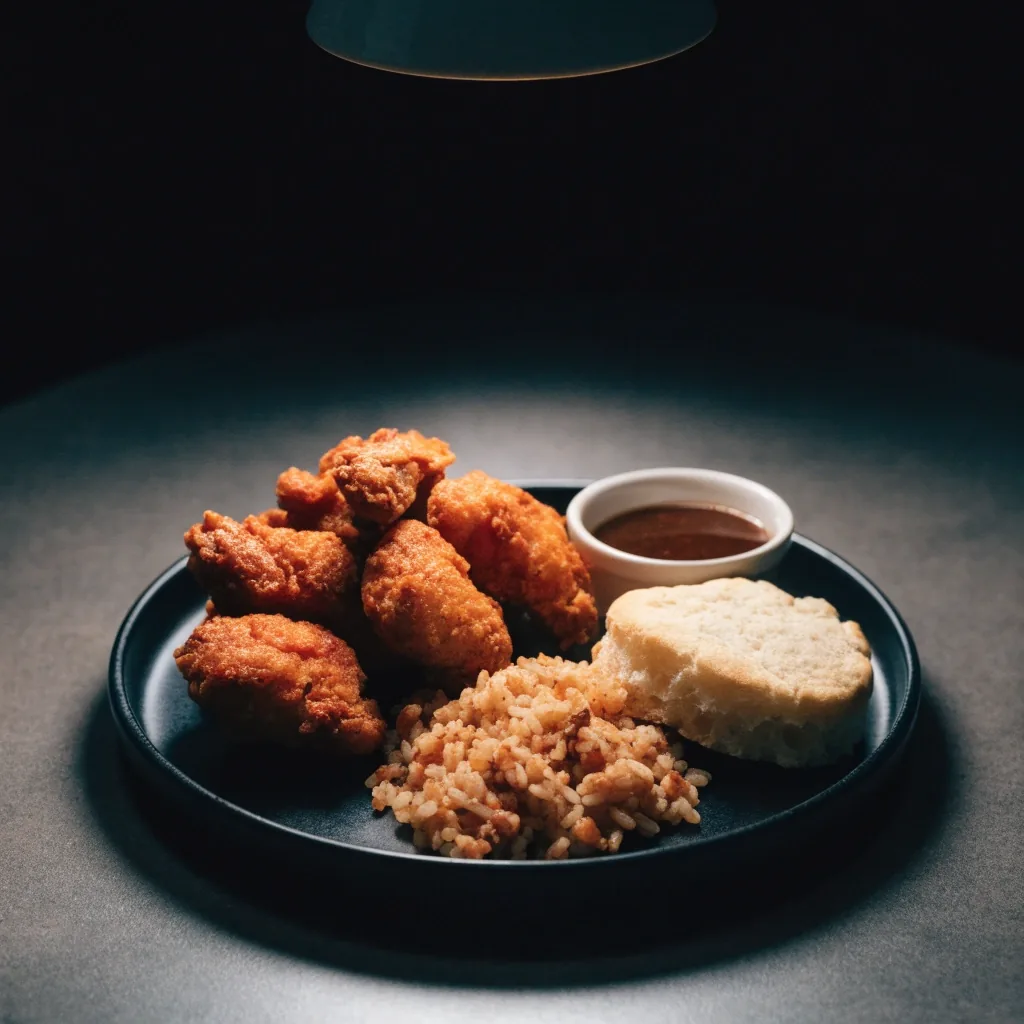
The cut, the breading, and the sauce are the three variables that shift most. Southern fried chicken leans on seasoned flour and a hot fry. Tikka Masala leans on a marinade and a simmered sauce. Orange Chicken leans on a batter and a sweet glaze. Same bird, different decisions.
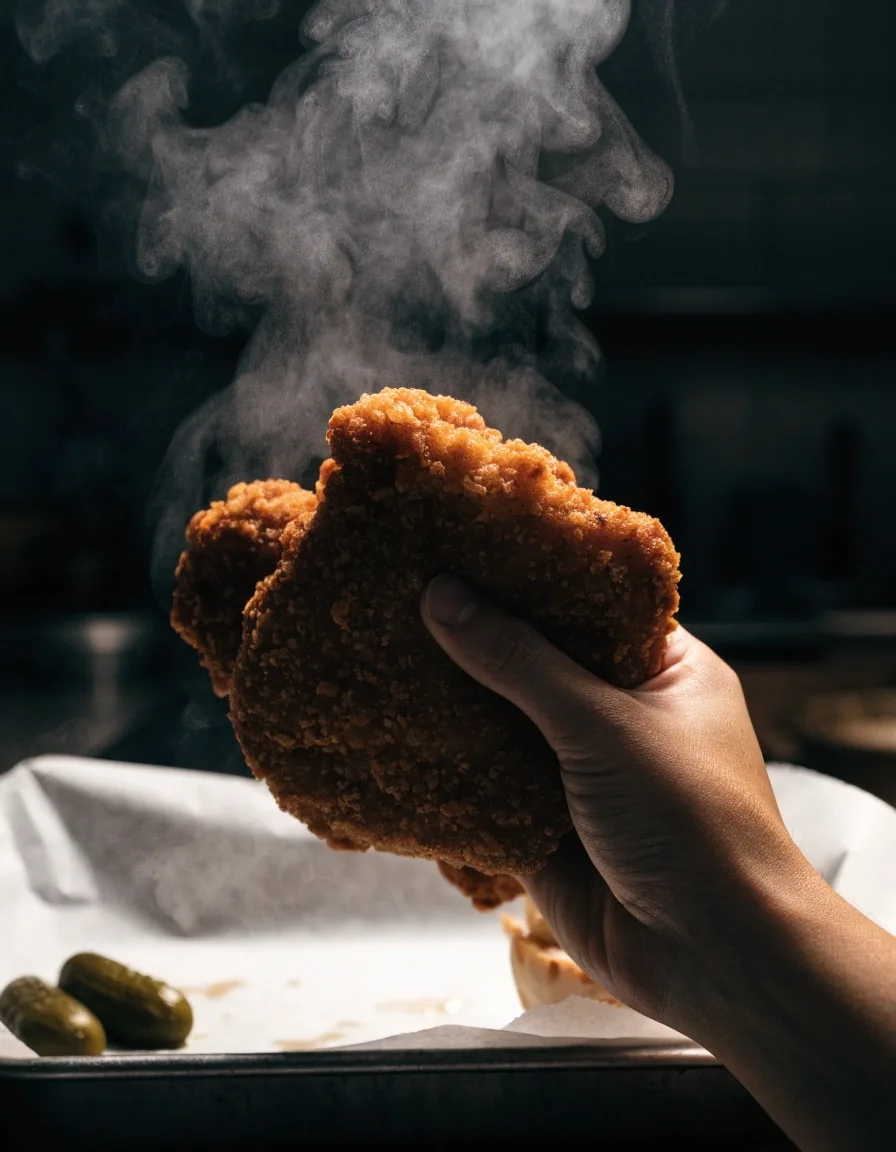
Bone-in pieces for a fry, boneless chunks for a curry, thin fillets for a sandwich. The cut decides how fast the meat cooks and how much surface the coating gets.
Flour dredge, cornstarch batter, or none at all. Breading is also a heat shield — a thick coat protects the meat, a thin one lets the sauce through.
Gravy, cream-and-tomato, citrus glaze, or nothing. Sauce is added late or served on the side — the closer it hits the plate to serving time, the better the crust holds.
A printed stat, not a slider. Nashville-style hot chicken, Cajun seasoning, and a chili-oil finish sit at the top; Orange Chicken and a plain fried plate sit at the bottom.
Rice, biscuits, flatbread, slaw, or pickles. The side tells you which cuisine the plate came from before you taste the chicken.